


|
A much deeper discussion of the tripping GRAPH presented by manufacturers. This is a continuation from posts:
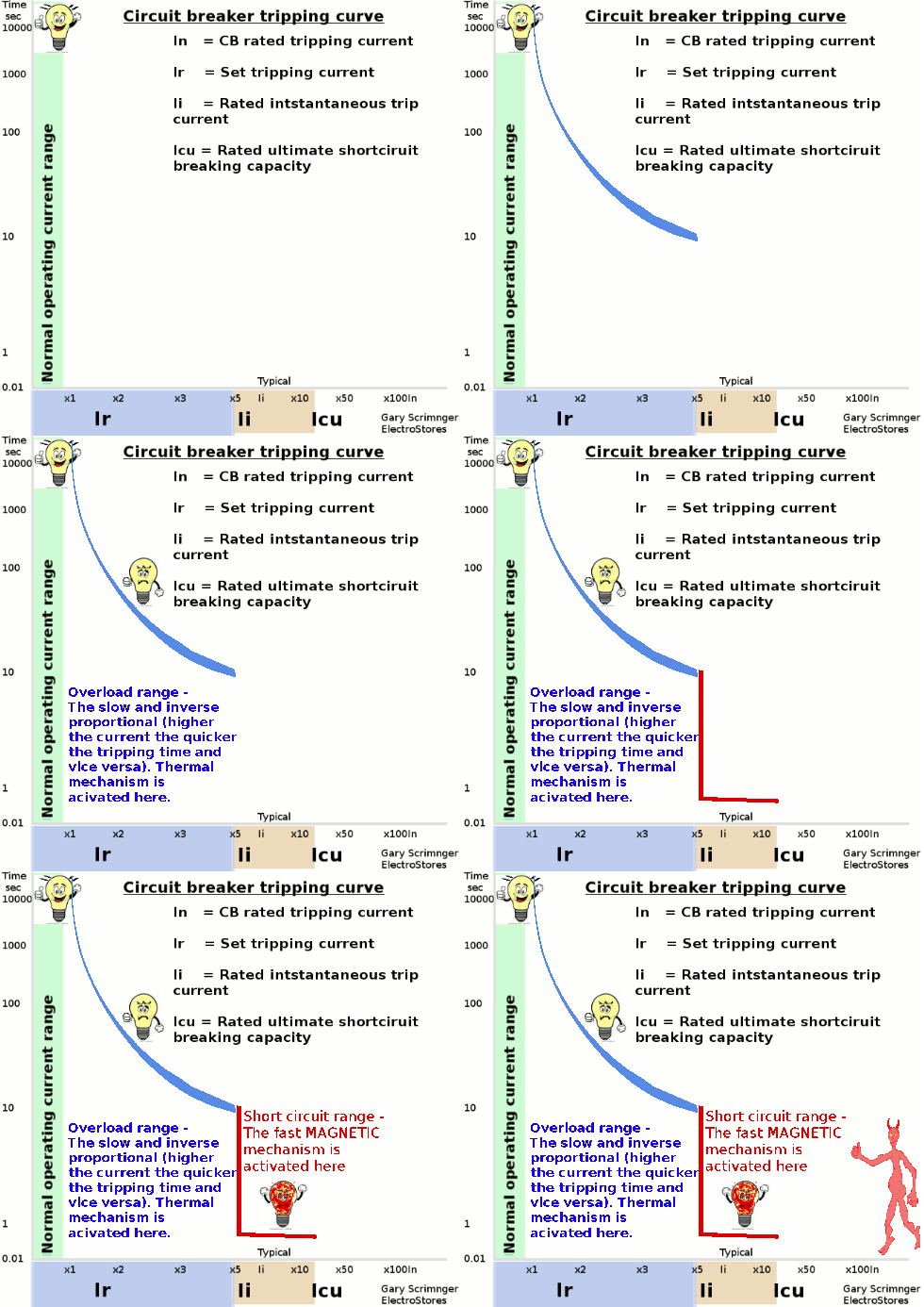
For years I looked at the graphs from manufacturers and there was a knowing feeling that there must be some misrepresentation of the curve because it does not really work like that, does it? Historically the Thermo-magnetic curve looked like this.
—===— By virtue of the thermal-magnetic technology the graph follows a natural curve of the heating of the bi-metal strip and there was not much flexibility to it. The “current tripping points” can be adjusted but we still had to follow the curved graph – that’s how the metals bent as they heated up at different current values. Then electronics came and changed it all, and our circuit breaker tripping curves migrated to the LSI curve. And these are the curves in question:- It always felt as if these curves only represent half the story…as if it still wants to accommodate the thermal-magnetic curve…like there is a dimension missing. Does the tripping curve really follow these strange straight lines…or are they trying to say something else. —===—
 Abb emax trip curve
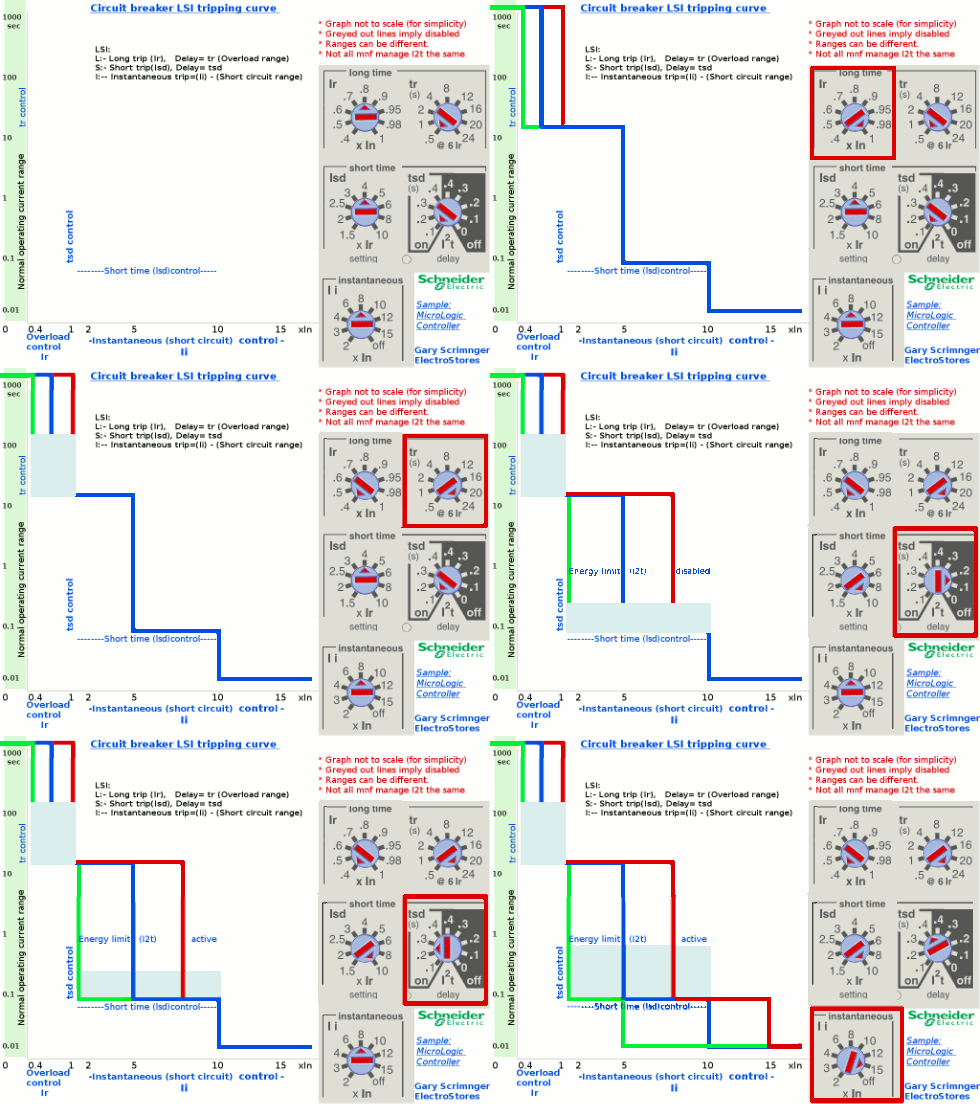
What does all these curves have in common…they do not show or even imply that: The real tripping values is not necessarily all these slanted lines…but really that every point between the allotted time range and Ir range, is programmable. Below graphic should explain it easier.
—===—  LSI my ABB curve –===— And on that note, I show what I believe the LSI graph should really look like to be a closer representation of the LSI capabilities. *It is a GIF just to reiterate my point though the static version should serve as well.
It graphically shows complete program areas including when a “function” is enabled (lines showing)/disabled (lines greyed out) due to a timing delay or programmed so. E.G: Notice for I2t function when enabled the trip function will be active by showing trip lines during timing and when I2t disabled the trip lines do not show. |
||||||||
|
in
ALL
-
A much deeper discussion of the circuit breaker tripping graph

Subscribe
0 Comments
oldest